
Quick Listen:
The conversation around the workplace has matured. What began as sharp divisions between remote and in-office camps has settled into a more balanced understanding: the future of work is hybrid. Organizations are no longer reacting to crisis but deliberately reshaping physical spaces to accommodate both deep individual focus and meaningful face-to-face collaboration. The old model of fixed hours at uniform desks now feels outdated, giving way to environments that reflect how people actually accomplish their best work today.
This transition has been gradual yet steady. Companies that previously saw the office mainly as a tool for oversight now view it as essential infrastructure for building connections and sparking creativity. The outcome is workplaces that feel more humane, adaptable, and aligned with contemporary realities.
The Hybrid Model Takes Root
Hybrid arrangements have evolved from temporary experiments into the standard approach for a growing number of organizations. Workers divide their schedules between quiet home setups ideal for concentrated tasks and office settings designed to foster teamwork. The arrangement offers tangible benefits, including reduced commuting on select days, uninterrupted periods for individual projects at home, and richer, more productive interactions when colleagues gather in person.
Challenges remain, of course. Certain companies are thoughtfully adjusting expectations, using incentives or refined benefits to encourage more onsite presence without heavy-handed rules. Others continue emphasizing flexibility, aware that overly rigid return-to-office demands could drive away skilled talent in today’s competitive landscape. The clearest lesson emerging in 2026 is that hybrid work thrives when it is purposeful when time spent in the office serves a defined role rather than functioning as an unquestioned default.
Reimagining the Physical Office
Offices in 2026 look and operate differently than they did just a few years ago. The focus has shifted away from packing in as many desks as possible purely for cost efficiency. Instead, many firms are reducing their overall square footage while significantly upgrading the quality and versatility of the remaining space. Collaborative zones, adaptable meeting areas, and wellness-oriented spaces now take priority over long rows of identical workstations.
Progressive organizations treat the office as a destination for high-impact activities intense brainstorming, mentoring relationships, team-building experiences, and those valuable unplanned conversations that strengthen trust. Dedicated quiet zones still exist for focused work, but the greater emphasis lies on creating environments that employees genuinely want to visit. Features such as abundant natural light, access to outdoor areas, and thoughtful sustainable design help attract people without relying on mandates.
This change signals a deeper reevaluation of real estate strategy. Rather than committing to large, long-term leases for spaces that sit empty much of the week, companies are exploring more agile options, including coworking partnerships and smaller satellite locations positioned nearer to where their people actually live. The office is not vanishing; it is simply becoming more intentional and effective.
Technology as the Invisible Glue
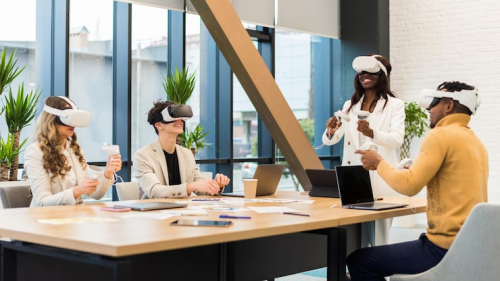
Successful hybrid work depends on technology that supports rather than distracts. Sophisticated video platforms, shared digital environments, and intelligent scheduling systems help ensure that remote and onsite participants can contribute equally. No team member should feel like an afterthought simply because they joined from home.
Attention to acoustic design has grown important as well, with rooms engineered to manage mixed participation smoothly and without technical friction. Organizations are also testing tools that enable strong asynchronous collaboration, so important work can advance steadily no matter who is physically present on any given day.
Still, technology is only part of the solution. The strongest implementations combine capable tools with clear guidelines about when and why teams should convene in person.
Adapting to AI and Broader Shifts
The rise of AI and the green transition continue to reshape how we work, as outlined in the World Economic Forum’s Future of Jobs Report 2023 . These powerful forces are driving significant changes in job requirements and overall workplace dynamics.
AI systems are increasingly managing repetitive tasks, which frees employees to concentrate on complex problem-solving and creative efforts work that frequently benefits from the energy of in-person collaboration. At the same time, sustainability priorities are encouraging organizations to develop offices with smaller carbon footprints, improved energy performance, and hybrid models that cut down on daily commuting.
Together, these developments point toward workplaces built for ongoing learning and adaptation. Employees need settings where they can rapidly build new capabilities alongside colleagues, test emerging technologies, and address multifaceted challenges in real time.
Navigating the Human Side of Hybrid
While hybrid models deliver efficiency, they also surface legitimate questions about maintaining strong connections and a healthy culture. Concerns include potentially weaker interpersonal bonds or fewer chances for organic learning. Some employees also grapple with maintaining clear boundaries between personal and professional life.
Thoughtful companies respond by ensuring that office days deliver genuine value. They structure gatherings around collaboration, innovation, and relationship development instead of routine updates that could easily occur online. Structured mentoring, shared team practices, and inclusive onboarding help preserve unity across distributed teams.
At its core, success depends on trust. Leaders who evaluate performance based on results rather than physical presence tend to see stronger engagement and commitment from their people. The aim is an environment where individuals feel supported and autonomous rather than monitored.
Common Challenges and Practical Fixes
- Equity across locations: Implement meeting practices and tools that give every participant an equal opportunity to contribute, regardless of location.
- Career development: Build pathways for recognition and advancement that do not rely exclusively on being physically present in the office.
- Well-being: Provide resources to help employees establish healthy boundaries and avoid burnout within flexible work structures.
Looking Ahead: A More Intentional Workplace
The most effective offices will operate less like traditional headquarters and more like dynamic ecosystems. Central locations will serve as key hubs, complemented by flexible options tailored to the needs of individuals and specific teams. This evolution does not eliminate shared physical space; it makes that space more strategic and valuable.
Successful leaders will avoid blanket policies that ignore real differences in roles and team dynamics. Instead, they will craft approaches shaped by business objectives while consistently placing people at the heart of decisions. The hybrid model rewards organizations that actively listen to their workforce and respond with thoughtful adaptations.
Ultimately, the office of 2026 is not about compelling everyone to return to identical desks at the same times. It is about designing environments where work feels productive, connected, and sustainable whether that happens in a central building, a neighborhood satellite, or a well-equipped home setup. As companies continue fine-tuning these systems, the organizations that thrive will be those that master the art of combining genuine flexibility with clear purpose, transforming hybrid work from a necessary adjustment into a lasting competitive strength.
Frequently Asked Questions
How is AI changing the future of hybrid workplaces?
AI is increasingly handling repetitive tasks, freeing employees to focus on complex problem-solving and creative work activities that often benefit most from in-person collaboration. This shift means hybrid offices are evolving into spaces built for rapid learning, experimentation with emerging technologies, and tackling multifaceted challenges alongside colleagues. Organizations that align their workplace strategy with both AI adoption and sustainability goals are best positioned for long-term adaptability.
How are offices being redesigned to support hybrid work in 2026?
Modern offices in 2026 are prioritizing quality over quantity, reducing overall square footage while upgrading spaces with collaborative zones, wellness areas, and flexible meeting rooms. Features like natural light, outdoor access, and sustainable design make the office a destination employees genuinely want to visit, rather than a place they’re mandated to be. Many companies are also exploring agile real estate options like coworking spaces and smaller satellite offices closer to where their employees live.
What does hybrid work look like in 2026, and is it here to stay?
In 2026, hybrid work has moved well beyond a temporary experiment and is now the standard model for a growing number of organizations. Employees split their time between home ideal for focused, individual tasks and the office, which is redesigned for collaboration, mentoring, and relationship-building. Companies that embrace purposeful hybrid arrangements, where office time serves a clear role rather than acting as an unquestioned default, are seeing the strongest results.
Disclaimer: The information provided is for general knowledge and educational purposes only and does not constitute professional advice.
You may also be interested in: The Real AI Risk in Higher Education: Student Unpreparedness
Organizations are being asked to prepare diverse talent for AI, changing work models, and rising skill demands, and technology alone won’t close the gap. Dr. JoAnn Rolle is a Ph.D. economist, former IBM executive, former Dean of the School of Business at Medgar Evers College (CUNY), Past President of the National HBCU Business Deans Roundtable, author of Tech-Enabled Futures. Her Tech-Enabled Futures™ approach treats AI as a teammate that amplifies human judgment instead of replacing it. She helps organizations turn AI disruption into practical, inclusive strategies that build AI readiness, develop talent, and prepare people to thrive in the future of work. Start the conversation today.
Powered by flareAI.co
