
Quick Listen:
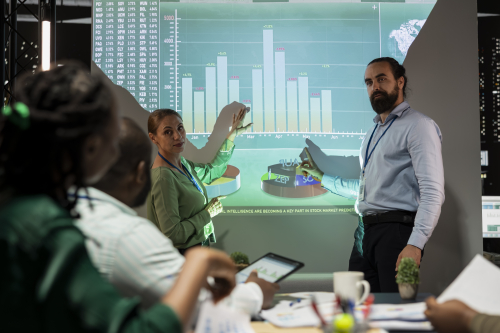
In boardrooms and on factory floors across North America and Europe, a quiet revolution is underway. Artificial intelligence isn’t replacing human workers it’s teaming up with them to create something far more powerful than either could achieve in isolation. From radiologists reviewing AI-assisted scans to logistics teams directing collaborative robots, this human-AI collaboration is reshaping how work gets done in the modern economy.
The shift feels both inevitable and rich with opportunity. Organizations navigating rapid technological change are discovering that the real winners will be those who master intelligent collaboration between people and machines. This isn’t automation for automation’s sake, but a strategic approach to amplifying human potential and driving sustainable results.
The Rise of AI-Human Partnerships Across Regions
Business leaders today recognize a fundamental truth: the most effective teams blend human insight with artificial intelligence. Forward-thinking organizations no longer view AI as a threat but as a capable collaborator that manages routine tasks, processes vast datasets, and surfaces insights freeing people to concentrate on strategy, creativity, and complex problem-solving.
This evolution holds particular importance in the United States, Canada, and across Europe, where competitive pressures demand both greater efficiency and continuous innovation. Understanding how humans and AI can work together effectively has become essential for maintaining operational excellence, building workforce resilience, and sustaining advantage in a global marketplace.
Key Trends Driving Intelligent Collaboration
AI integration manifests differently across industries, yet clear patterns have emerged. Healthcare, finance, manufacturing, and logistics organizations are deploying AI to support decision-making, enrich customer experiences, and streamline operations. Natural language processing enables customer service teams to respond with greater speed and accuracy, while predictive analytics help anticipate equipment issues before they disrupt production.
Workforce transformation runs parallel to these technological advances. Companies are investing in upskilling initiatives that develop AI literacy alongside core professional skills. Corporate training programs and university partnerships equip employees to collaborate effectively with intelligent systems, converting potential disruption into shared opportunity.
Insights from leading institutions such as MIT and Stanford, combined with guidance from bodies like the U.S. Department of Labor, consistently show that organizations thoughtfully combining human and machine strengths achieve stronger outcomes in productivity and employee engagement.
Transforming Healthcare Through Human-AI Teams
Healthcare provides some of the most compelling demonstrations of successful human-AI collaboration. AI tools help radiologists by highlighting potential abnormalities in medical images, enabling clinicians to direct their expertise toward the most nuanced cases and deliver faster, more accurate diagnoses. Hybrid teams of medical professionals and AI systems frequently outperform either working alone by identifying different categories of issues.
In behavioral health services, digital platforms and AI-powered tools are broadening access to support across the United States. These systems manage initial assessments, track symptoms via connected devices, and deliver personalized recommendations, while human therapists provide the essential empathy and contextual understanding central to effective care. Behavioral health services address daily habits, behaviors, and actions that significantly influence mental health, helping individuals manage challenges such as anxiety, depression, and substance use disorders.
Practical implementations reveal AI effectively reducing administrative burdens such as intelligent systems verifying insurance details allowing care teams to devote more meaningful time to patients.
Advancing Finance, Manufacturing, and Logistics
In finance and banking, AI demonstrates exceptional capability in analyzing large datasets for fraud detection and risk assessment. Human professionals then apply contextual judgment and strategic thinking to reach final decisions. This complementary division of responsibilities enhances accuracy while easing cognitive demands on analysts.
Manufacturing and logistics highlight the tangible dimension of collaboration through collaborative robots, often called cobots. In factories across the United States and Europe, these systems operate safely alongside human workers, managing repetitive or physically taxing duties. Manufacturers have reported notable gains in production efficiency and improved worker safety and ergonomics when integrating cobots for tasks like welding and machine tending.
As a result, employees transition from performing monotonous work to roles centered on process oversight, problem-solving, and innovation areas that truly leverage distinctively human strengths.
Addressing Challenges in Implementation
Despite the clear promise, realizing effective integration involves genuine hurdles. Skills gaps persist as many workers require targeted training to partner productively with AI tools. Organizations must address both technical competencies and the broader need to preserve meaningful human oversight and accountability.
Ethical considerations remain prominent, especially regarding potential algorithmic bias in areas such as hiring, lending, and healthcare decisions. Companies operating across the United States must carefully navigate regulatory frameworks including HIPAA, GDPR, and CCPA, while prioritizing transparency in all AI-assisted processes.
Change management also presents a critical test. Successfully embedding new workflows demands cultural adaptation, transparent communication, and candid discussions about evolving job responsibilities. Leaders who approach this as an organizational and human development priority rather than solely a technology initiative typically achieve smoother, more sustainable transitions.
Realizing Opportunities and Strategic Value
When implemented thoughtfully, AI and human collaboration generates significant benefits. Automating repetitive tasks grants employees greater capacity for higher-value activities requiring creativity, emotional intelligence, and strategic judgment. This evolution frequently contributes to increased job satisfaction and accelerated innovation.
Decision-making gains depth as AI delivers rapid analysis and scenario modeling, while humans contribute intuition, ethical reasoning, and stakeholder understanding. Organizations across North America and Europe are finding that well-designed partnerships enhance both competitive positioning and overall workforce well-being.
Mental wellness initiatives, for example, increasingly blend digital tools with human support networks. This approach recognizes that technology achieves optimal impact when it complements rather than supplants human connection, supporting individual’s social, emotional, and psychological well-being.
Strategies for Building Effective Intelligent Teams
Creating high-performing human-AI teams requires deliberate design and ongoing attention. Successful organizations typically prioritize several key elements:
- Clear definition of roles that capitalize on the unique strengths of both humans and machines
- Continuous learning programs focused on collaboration capabilities and adaptability
- Strong governance structures that address ethics, transparency, and accountability
- Balanced performance metrics that evaluate both business outcomes and employee experience
Leaders who communicate openly about AI’s role within the organization’s broader mission tend to foster trust and genuine enthusiasm instead of apprehension.
The Path Ahead: Shaping Work Together
The future of work will not pit humans against machines. Instead, it will be defined by humans and machines operating in genuine partnership. Organizations that embrace this reality with intention stand to unlock new levels of productivity, creativity, and human fulfillment.
As AI capabilities advance, competitive advantage will increasingly belong to those who refine the nuanced practice of collaboration. Technology supplies powerful tools, but people bring the vision, judgment, empathy, and creativity that transform information into meaningful progress.
The central question is not whether AI will transform work it already is. The more important issue is how thoughtfully we choose to guide that transformation. Businesses that invest meaningfully in their people while adopting intelligent technologies with care will be best positioned to thrive in the evolving economy.
Ultimately, the partnership between human ingenuity and artificial intelligence represents far more than a passing technological trend. It charts a course toward work that feels more meaningful, more productive, and profoundly more human.
Frequently Asked Questions
How is AI and human collaboration changing the modern workplace?
AI and human collaboration is reshaping work by pairing machine efficiency with human judgment, rather than replacing workers outright. AI handles routine tasks, processes large datasets, and surfaces insights, while people focus on strategy, creativity, and complex problem-solving. Industries from healthcare to manufacturing are seeing stronger outcomes in productivity and employee engagement when human and machine strengths are thoughtfully combined.
What are real-world examples of successful human-AI collaboration in industries like healthcare and manufacturing?
In healthcare, AI tools assist radiologists by flagging potential abnormalities in medical images, allowing clinicians to focus on nuanced cases and deliver faster, more accurate diagnoses. In manufacturing and logistics, collaborative robots (cobots) handle repetitive or physically demanding tasks alongside human workers, improving production efficiency and workplace safety. These hybrid models consistently outperform either humans or AI working in isolation.
What challenges do organizations face when implementing AI collaboration, and how can they overcome them?
Key challenges include skills gaps, algorithmic bias, and navigating regulatory frameworks such as HIPAA, GDPR, and CCPA. Organizations also face cultural resistance, making transparent communication and change management essential. Companies that treat AI adoption as a human development priority investing in upskilling, clear role definitions, and strong governance structures tend to achieve smoother, more sustainable transitions.
Disclaimer: The information provided is for general knowledge and educational purposes only and does not constitute professional advice.
You may also be interested in: Bridging Generations: How Technology and Innovation Empower Seniors
Organizations are being asked to prepare diverse talent for AI, changing work models, and rising skill demands, and technology alone won’t close the gap. Dr. JoAnn Rolle is a Ph.D. economist, former IBM executive, former Dean of the School of Business at Medgar Evers College (CUNY), Past President of the National HBCU Business Deans Roundtable, author of Tech-Enabled Futures. Her Tech-Enabled Futures™ approach treats AI as a teammate that amplifies human judgment instead of replacing it. She helps organizations turn AI disruption into practical, inclusive strategies that build AI readiness, develop talent, and prepare people to thrive in the future of work. Start the conversation today.
Powered by flareAI.co

One thought on “AI and Human Collaboration: Redefining Work in the Modern Economy”
Comments are closed.