
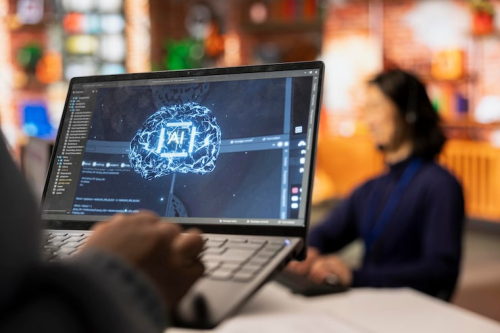
In boardrooms across the United States, from tech hubs in Austin to manufacturing floors in the Midwest, and extending into corporate offices in Toronto and innovation centers across Europe, leaders are confronting a fundamental shift: artificial intelligence is no longer a futuristic concept but a daily reality reshaping how work gets done. How Businesses Are Shaping Workforce Development Programs Around AI has moved from theoretical discussion to urgent priority, as organizations scramble to prepare their people for roles that increasingly blend human judgment with machine intelligence.
Organizations are being asked to prepare diverse talent for AI, shifting work models, and rising skill demands yet many approaches still fall short. The result is widening gaps, missed potential, and stalled progress. Dr. Jo Ann Rolle brings 35+ years of cross-sector insight to help leaders build practical, inclusive strategies for workforce, education, and entrepreneurship. Start the conversation today!
The New Reality of Work in an AI Era
American, Canadian, and European businesses are discovering that traditional training methods often fall short when algorithms excel at pattern recognition, data analysis, and routine customer interactions. The real challenge lies in rethinking how employees learn, adapt, and deliver value in environments where AI manages repetitive tasks, freeing people to focus on higher-level contributions.
This transformation spans every sector. Retail operations experiment with AI systems that anticipate customer needs. Healthcare providers use intelligent tools for better scheduling and patient flow. Financial services deploy predictive capabilities to spot opportunities and risks early. What unites successful organizations is a clear recognition: investing in people must match or exceed investments in technology itself.
Emerging Trends Reshaping Workforce Development
Forward-thinking companies are shifting away from one-size-fits-all programs toward adaptive learning platforms that respond in real time to individual progress and needs. These systems examine performance patterns to suggest personalized development paths, emphasizing skills that complement AI rather than compete with it.
A strong focus has emerged on building “AI-native” competencies combining technical understanding with core human strengths such as creative problem-solving, emotional intelligence, and ethical decision-making. Employees learn not only how to operate AI tools effectively, but also when to question results, when to intervene, and how to maintain clear accountability in human-AI collaboration.
Blending Technical Proficiency with Human Insight
The most impactful programs pair technical training with leadership and soft skills development. This creates teams capable of working across traditional boundaries. Such approaches reflect a rare blend of technology and humanity, producing solutions that respect both operational efficiency and human dignity while drawing on real-world expertise rather than pure theory.
Cross-Industry Collaboration Building Stronger Talent Pipelines
Innovation thrives through partnership. Universities, corporations, and government bodies in the US, Canada, and across Europe are creating new alliances to develop AI-ready talent. Community colleges in transitioning regions offer targeted programs preparing workers for smart manufacturing and data-informed logistics roles.
These efforts go well beyond classrooms. Professional networks and industry groups share learning resources, encouraging organizations to treat workforce development as a shared priority. The outcome is a more resilient talent ecosystem benefiting entire communities and economic regions.
Real-World Applications Delivering Results
Many organizations have advanced from small pilots to company-wide AI-enhanced training initiatives. Retail leaders, for instance, deploy intelligent systems that detect skills gaps instantly and deliver short, focused learning modules during natural breaks in the workday. This method respects employee’s time and builds genuine confidence alongside measurable performance gains.
Higher education institutions have formed practical partnerships with industry, developing certification programs that merge academic depth with immediate on-the-job applicability. Both current students and experienced professionals gain direct exposure to the tools transforming their fields.
Boosting Engagement Through Personalized Growth
AI enables a shift from generic career paths to truly individualized development experiences. By reviewing performance trends and learning preferences, companies can recommend opportunities that feel meaningful and relevant. This personalization strengthens retention and creates robust internal talent pipelines across North America and Europe.
Leveraging Productivity and Remote Work Tools
Organizations are turning to advanced productivity management software and remote working tools to support their AI workforce strategies. These platforms help track activity, enhance collaboration, and gather insights that drive performance improvements in hybrid environments. North American companies, in particular, have embraced these solutions to maintain strong team connections across distances.
Tools focused on project management and cross-platform collaboration prove especially valuable as teams navigate multiple time zones and distributed work models. The emphasis remains on using technology to amplify human potential rather than replace it.
Navigating Implementation Challenges
Despite clear benefits, integrating AI into workforce programs presents genuine hurdles. Legacy systems, cultural resistance, and the complexity of blending new tools with existing processes require careful navigation. Leaders must balance efficiency gains with the preservation of meaningful human connections in learning experiences.
Data privacy stands out as a critical concern. Compliance with regulations such as CCPA in the United States, GDPR in Europe, and equivalent Canadian standards demands thoughtful governance. Companies must build employee trust around how learning data is collected, used, and protected.
Addressing Ethical Questions and Long-Term Skill Alignment
Successful AI adoption keeps the human element at its core. Organizations treating development as a purely technical matter frequently encounter limited results. The strongest approaches stay thoughtful and purpose-driven, focusing on employee fulfillment, career sustainability, and meaningful work alongside productivity metrics.
Leaders continually work to ensure training addresses genuine future requirements rather than temporary trends. This demands open dialogue among technology specialists, HR teams, and frontline employees who best understand day-to-day realities.
Measuring What Truly Matters
Progressive organizations assess their AI workforce efforts through varied lenses: enhanced innovation, improved employee satisfaction, faster skill acquisition, and better collaboration across teams. They understand that the most significant outcomes often resist straightforward numerical measurement.
Notable successes frequently involve teams combining AI precision with human creativity to tackle complex challenges. These hybrid solutions generate competitive advantages that neither purely automated nor entirely manual approaches can achieve.
Preparing Organizations for Continued Evolution
As artificial intelligence capabilities advance, workforce development must stay flexible and responsive. Companies building cultures of continuous learning where experimentation, reflection, and adaptation feel natural position themselves to succeed through ongoing technological change.
The integration of practical, real-world expertise with emerging tools creates particularly promising results. Organizations that ground their programs in lived experience while embracing innovation develop authentic initiatives that resonate with employees rather than feeling externally imposed.
Turning Strategic Insight into Practical Action
Businesses prepared to lead should start with a candid evaluation of current strengths and gaps. Piloting personalized learning approaches in select areas, carefully measuring outcomes, and scaling successful elements offers a pragmatic path forward.
Visible leadership commitment makes a decisive difference. When executives actively participate in development programs and demonstrate curiosity about AI tools, they communicate that growth matters at every organizational level. This cultural signal often delivers greater impact than any single technology purchase.
The organizations actively shaping workforce development around AI are not merely adapting to change they are helping define its direction. By matching strategic investment in people with their commitment to technology, they cultivate resilience, spark innovation, and preserve the distinctly human qualities that drive lasting success. The central question facing leaders today is not whether AI will transform work, but whether their organizations will evolve their approach to people quickly enough to fully realize the opportunities ahead.
Frequently Asked Questions
What skills do employees need to thrive in an AI-driven workplace?
Employees need what are increasingly called “AI-native” competencies a blend of technical understanding and distinctly human capabilities. This includes knowing how to operate AI tools effectively, but also when to question results, when to intervene, and how to maintain accountability in human-AI collaboration. Soft skills such as leadership, cross-functional communication, and ethical judgment are equally prioritized alongside technical training.
What challenges do companies face when integrating AI into workforce development?
Key challenges include overcoming legacy systems, cultural resistance, and the complexity of blending new AI tools with existing processes. Data privacy is a significant concern, requiring compliance with regulations like GDPR in Europe and CCPA in the United States, along with building employee trust around how learning data is collected and used. Organizations that approach development as purely a technical exercise often see limited results the most successful programs keep the human element central to every initiative.
How are businesses reshaping workforce development programs to prepare employees for AI?
Businesses are moving away from one-size-fits-all training toward adaptive learning platforms that personalize development based on individual progress and performance patterns. The most effective programs combine technical AI proficiency with human strengths like creative problem-solving, emotional intelligence, and ethical decision-making. Leading organizations also partner with universities, community colleges, and industry groups to build broader, AI-ready talent pipelines that benefit entire communities and economic regions.
Disclaimer: The above helpful resources content contains personal opinions and experiences. The information provided is for general knowledge and does not constitute professional advice.
You may also be interested in: Artists and art enthusiasts from around the world co-create the Future of Humanity
Organizations are being asked to prepare diverse talent for AI, shifting work models, and rising skill demands yet many approaches still fall short. The result is widening gaps, missed potential, and stalled progress. Dr. Jo Ann Rolle brings 35+ years of cross-sector insight to help leaders build practical, inclusive strategies for workforce, education, and entrepreneurship. Start the conversation today!
Powered by flareAI.co
