
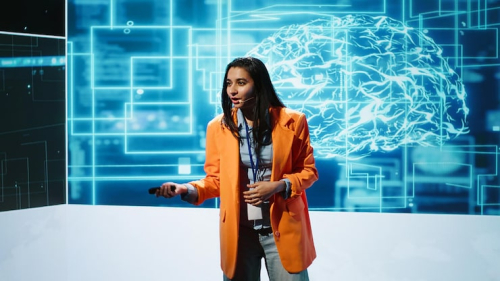
In boardrooms across the United States, Canada, and key European markets, a quiet revolution is reshaping how companies build and nurture their most valuable asset: their people. Artificial intelligence is no longer a futuristic concept in talent management it has become the practical engine driving more responsive, personalized, and effective approaches to organizational learning and growth .
Forward-thinking leaders have discovered that AI-powered tools can transform rigid training programs into dynamic experiences that adapt to individual needs, anticipate skill gaps, and deliver knowledge exactly when employees need it. This shift goes beyond efficiency. It fundamentally changes how organizations develop talent, boost engagement, and maintain competitive advantage in an economy where skills evolve faster than ever before.
AI as a Catalyst for Workforce Transformation
Companies in North America and Europe face unprecedented pressure to keep their workforces agile. Rapid technological change, shifting market demands, and evolving talent shortages have rendered traditional one-size-fits-all training programs obsolete. AI now serves as both diagnostician and coach, analyzing performance data, learning patterns, and business objectives to create truly tailored development pathways.
The outcome is powerful: employees who feel genuinely supported in their professional growth rather than simply processed through annual compliance modules. Organizations adopting these strategies often see stronger retention, higher productivity, and a culture where continuous learning integrates into daily workflows instead of remaining a periodic checkbox exercise.
What makes this transformation particularly impactful across the United States is the strong alignment between advanced technological capabilities and pressing business needs. From tech corridors in Austin and Seattle to manufacturing hubs in the Midwest, financial centers in New York and Toronto, and innovation ecosystems in London, Berlin, and Amsterdam, leaders are rethinking talent strategies with AI firmly at the center.
Emerging Trends in AI-Enabled Learning
Personalized learning paths stand out as one of the most significant breakthroughs. Instead of requiring every sales professional or engineer to complete identical content, AI systems evaluate current competencies, preferred learning styles, and role-specific requirements to design individualized journeys. A team member facing challenges with data analysis might receive focused, bite-sized modules emphasizing practical application, while a high performer gains access to advanced strategic content.
Adaptive training builds on this foundation by adjusting difficulty and pace in real time. Quick mastery of a concept propels learners forward to more challenging material. When someone struggles, the system provides alternative explanations, different formats, or connections to internal mentors with relevant expertise.
Skills gap analysis has evolved dramatically from occasional HR surveys into continuous, data-driven intelligence. Modern AI tools examine job descriptions, performance reviews, industry developments, and employee aspirations to spotlight emerging needs well before they become critical shortages. Natural language processing further enhances this by interpreting internal communications and customer feedback to reveal patterns that might otherwise go unnoticed.
Predictive Analytics Shaping Talent Strategy
Predictive models now enable organizations to anticipate workforce requirements months or even years in advance. By reviewing internal mobility patterns, labor market signals, and strategic business forecasts, these systems guide proactive investments in development. A financial services organization, for example, might identify the growing need for AI-literate compliance specialists ahead of regulatory shifts, allowing time to cultivate internal expertise rather than depending on last-minute external recruitment.
The Rise of Microlearning in Modern Workflows
Organizations across high-turnover industries and those with stringent compliance requirements are increasingly embracing microlearning approaches to support skills-based, just-in-time learning that fits naturally into the flow of work. These mobile-first solutions deliver focused knowledge precisely when and where employees need it, proving especially valuable in fast-paced environments throughout North America and Europe.
Real-World Applications Across Industries
Leading organizations in the United States and beyond have moved from pilot initiatives to full integration of AI within their talent ecosystems. One prominent Fortune 500 technology company deployed adaptive learning modules that tailor content according to each employee’s specific role, ongoing projects, and demonstrated proficiency levels. Customer support new hires begin with foundational training that intelligently evolves as they tackle increasingly complex scenarios, while seasoned professionals receive targeted guidance toward leadership or specialized technical pathways.
In healthcare and financial services sectors burdened with heavy regulatory demands AI-supported microlearning has gained strong momentum. Short, focused modules allow employees to reinforce critical knowledge during natural workflow breaks without disrupting operations. This method effectively balances immediate performance requirements with sustained career development.
Manufacturing and logistics enterprises have successfully applied comparable principles to safety training and technical upskilling. AI systems process data from equipment sensors alongside employee assessments to generate highly relevant training content. The result is fewer errors and faster mastery of new technologies and processes.
Bridging Talent Acquisition and Long-Term Retention
AI’s influence reaches beyond current employees into how organizations identify and onboard new talent. Sophisticated platforms now evaluate candidates based on potential and learning agility in addition to traditional credentials. After hiring, AI continues to support smooth integration through personalized onboarding experiences that account for individual backgrounds, role demands, and team dynamics.
This comprehensive strategy strengthens retention by establishing clear growth trajectories from the very first day. Employees experience tangible organizational investment in their development, which consistently correlates with higher engagement and loyalty. In competitive talent markets spanning the United States, this has emerged as a meaningful differentiator for employer branding.
Navigating Implementation Challenges Thoughtfully
Realizing the full potential of AI in talent strategies demands careful execution. Organizations must proactively address data privacy considerations, especially under regulations such as CCPA in California, GDPR across Europe, and HIPAA in healthcare contexts. Transparency about data usage and maintaining meaningful human oversight are essential for building employee trust.
Effective change management plays a vital role. The strongest implementations combine powerful technology with clear communication that emphasizes augmentation of human potential rather than replacement. Preparing HR professionals and managers to collaborate effectively with AI tools keeps the human element central to all talent development efforts.
Successful organizations typically begin with targeted use cases such as skills assessment or microlearning before scaling across the entire talent lifecycle. This measured approach facilitates smoother integration with existing systems and delivers early wins that build internal momentum.
Measuring Meaningful Business Outcomes
Progressive companies evaluate success through outcomes that directly impact performance: accelerated time-to-productivity for new hires, measurable gains in critical skill areas, increased internal mobility, and enhanced innovation capacity. Many have connected AI-enhanced learning initiatives to improvements in customer satisfaction and overall business results.
Qualitative advantages prove equally significant. Employees frequently report increased confidence, clearer career progression opportunities, and a deeper sense of organizational value. This ongoing commitment to growth fosters resilience that benefits companies during periods of both expansion and economic uncertainty.
Looking Forward: Strategic Talent Development in an AI Era
As artificial intelligence capabilities continue to mature, the organizations poised for greatest success will treat talent development as a core strategic priority rather than an administrative task. This evolution means shifting from occasional training events toward embedded, always-available learning experiences that adapt dynamically to both personal aspirations and evolving business priorities.
Across the United States, we are witnessing the early chapters of a profound transformation in workplace learning. Companies that thoughtfully embrace AI while preserving human judgment and relationships at the core will develop workforces uniquely equipped to thrive amid constant change.
Ultimately, this transformation extends far beyond technology adoption. It involves reimagining how organizations learn, grow, and succeed together in a rapidly evolving world. Those who master this approach will not simply adapt to the future they will actively shape it.
The most inspiring insight from pioneering adopters remains refreshingly human: when advanced tools are thoughtfully aligned with genuine development needs, both individuals and their organizations unlock entirely new levels of potential.
Frequently Asked Questions
How is AI transforming employee training and development in the workplace?
AI is converting rigid, one-size-fits-all training programs into dynamic, personalized learning experiences that adapt to each employee’s skill level, role, and learning style. By continuously analyzing performance data and learning patterns, AI systems can identify skill gaps, adjust content difficulty in real time, and deliver knowledge exactly when employees need it. This shift helps organizations boost engagement, accelerate productivity, and build a culture of continuous learning rather than periodic checkbox exercises.
What industries are seeing the biggest benefits from AI-powered learning and talent management?
Healthcare, financial services, manufacturing, logistics, and technology sectors have been among the earliest and most active adopters of AI-driven talent strategies. In highly regulated fields like healthcare and finance, AI-supported microlearning helps employees reinforce compliance knowledge without disrupting daily operations. Meanwhile, manufacturing and logistics companies use AI to process equipment sensor data alongside employee assessments, resulting in safer workplaces and faster mastery of new technologies.
What challenges should organizations consider before implementing AI in their talent strategies?
Organizations must proactively address data privacy requirements including GDPR in Europe, CCPA in California, and HIPAA in healthcare and be transparent with employees about how their data is used. Strong change management is equally critical; the most successful implementations pair the technology with clear communication that frames AI as a tool for enhancing human potential, not replacing it. Experts recommend starting with focused use cases like skills assessment or microlearning before scaling across the full talent lifecycle to build internal confidence and ensure smoother integration.
Disclaimer: The information provided is for general knowledge and educational purposes only and does not constitute professional advice.
You may also be interested in: Bridging Generations: How Technology and Innovation Empower Seniors
Organizations are being asked to prepare diverse talent for AI, changing work models, and rising skill demands, and technology alone won’t close the gap. Dr. JoAnn Rolle is a Ph.D. economist, former IBM executive, former Dean of the School of Business at Medgar Evers College (CUNY), Past President of the National HBCU Business Deans Roundtable, author of Tech-Enabled Futures. Her Tech-Enabled Futures™ approach treats AI as a teammate that amplifies human judgment instead of replacing it. She helps organizations turn AI disruption into practical, inclusive strategies that build AI readiness, develop talent, and prepare people to thrive in the future of work. Start the conversation today.
Powered by flareAI.co
