
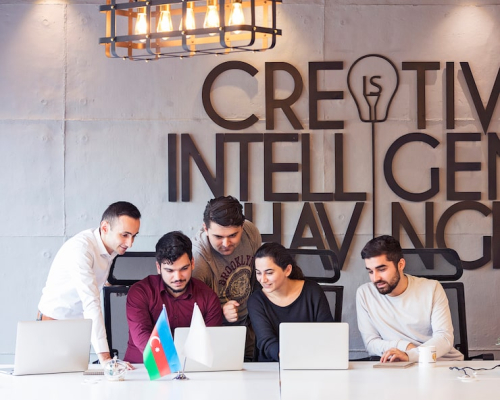
Creativity in a business context goes far beyond abstract artistic expression. It represents the practical ability to connect disparate ideas, question long-held assumptions, and develop novel solutions when facing real-world pressures. Across North American and European organizations, this capability has grown increasingly vital as traditional hierarchies evolve into more dynamic, adaptive structures. Teams that effectively harness creativity consistently outperform others by navigating complexity with greater agility and converting challenges into meaningful opportunities.
The rise of distributed work has intensified the demand for fresh perspectives. When team members operate across different locations and time zones, innovation rarely occurs spontaneously it demands deliberate cultivation. Leading companies recognize that creative teams deliver stronger employee engagement, quicker resolution of issues, and customer experiences that truly resonate. This creates a tangible edge in sectors ranging from technology and finance to healthcare and professional services.
Hybrid Environments: Fostering Creative Flow Across Regions
Hybrid and flexible work arrangements have evolved from short-term solutions into foundational elements of high-performance culture in both North America and Europe. Organizations are intentionally designing these environments to promote serendipitous interactions alongside focused deep work that sparks genuine creativity. Digital workplace platforms play a central role here, enabling seamless collaboration, communication, and efficient performance across diverse settings while aligning IT, HR, and business operations into unified experiences.
Many firms have adopted asynchronous collaboration tools that empower team members to share ideas across time zones without the exhaustion of constant video calls. This flexibility provides valuable space for individual reflection while preserving strong team cohesion. The result is richer, more diverse input and elevated creative output, as employees contribute their strongest thinking rather than reacting in real time. Leaders are also reimagining physical offices as innovation hubs dedicated spaces for workshops, informal brainstorming sessions, and cross-pollination of ideas.
Leveraging AI Tools to Amplify Human Creativity
Artificial intelligence is emerging as a powerful ally rather than a replacement for human ingenuity in creative processes. Progressive organizations throughout the US, Canada, and Europe are integrating AI-driven platforms for project management, idea generation, and knowledge sharing. These tools handle routine tasks, allowing teams to concentrate on higher-level strategic thinking and innovation.
Cross-Functional Collaboration: Unlocking Diverse Perspectives
Traditional departmental silos are dissolving in favor of fluid, multi-disciplinary teams that combine expertise from various functions. This shift toward cross-functional collaboration brings together professionals from engineering, marketing, design, operations, and beyond, generating richer viewpoints and more comprehensive solutions to complex problems.
In practice, these teams address challenges holistically from the outset. For example, including customer support voices early in product development incorporates practical insights that help avoid expensive adjustments later. The blend of diverse backgrounds, experiences, and disciplinary knowledge naturally stimulates creative breakthroughs that more uniform groups seldom achieve. Organizations are supporting this model through shared digital environments and regular knowledge-sharing forums, leading to faster innovation cycles and outcomes better suited to today’s multifaceted market demands.
Real-World Applications in Leading Organizations
Google continues to champion structured creativity through initiatives like its well-known 20% time approach, thoughtfully adapted for today’s hybrid realities. Teams are encouraged to pursue passion projects alongside primary responsibilities, fostering breakthrough innovations and embedding a culture where creative thinking feels natural and expected.
In healthcare settings across the United States, major hospital systems have established cross-disciplinary innovation labs. Clinicians, administrators, technologists, and patients collaborate on improving processes, resulting in streamlined patient journeys and novel care models that enhance outcomes while reducing unnecessary burdens. Similar collaborative approaches are gaining traction in Canada and across European institutions, adapting to local contexts and regulatory frameworks.
These cases share a vital lesson: high-performing organizations do not leave creativity to chance. They deliberately construct systems, rituals, and cultural expectations that make innovative thinking the standard way of operating.
Practical Strategies for Building Creative High-Performance Teams
Leaders committed to strengthening their teams can implement several effective approaches:
- Build psychological safety: Innovation flourishes when people feel secure sharing bold or unconventional ideas without fear of judgment.
- Create regular creativity rituals: Schedule protected time for unstructured ideation, constructive reviews of setbacks, and opportunities for cross-team observation and learning.
- Adopt technology with intention: Choose and deploy tools that support rather than disrupt creative momentum, supported by clear usage guidelines.
- Track meaningful outcomes: Balance traditional performance measures with indicators that recognize contributions to creative problem-solving and innovation.
- Support ongoing development: Offer access to workshops, external viewpoints, and skill-building experiences that expand individual and collective creative capacity.
These strategies deliver the best results when tailored to specific organizational needs and visibly championed by leadership.
Addressing Key Challenges in Distributed Creative Work
Creating and sustaining creative teams comes with obstacles. Hybrid and remote configurations can occasionally reduce spontaneous exchanges, while pressing deadlines may limit room for exploration. Successful organizations respond by establishing intentional connection points both virtual and in-person and safeguarding dedicated time for creative efforts even amid heavy operational demands.
Balancing individual deep focus with collective collaboration represents another common tension. Effective leaders navigate this balance skillfully, granting autonomy for concentrated thinking while facilitating meaningful group synthesis. Data security and compliance also remain critical, especially in regulated industries. Companies are adopting solutions that safeguard sensitive information while supporting the open idea exchange vital to creativity. This includes approaches aligned with standards such as HIPAA, GDPR, and CCPA, ensuring protection without hindering innovation. Remote work security solutions help organizations monitor activity, prevent threats, and implement zero-trust models tailored to distributed environments.
The Enduring Creative Advantage
Organizations that place creativity at the center of their strategy will maintain a significant edge. High-performance teams are ultimately defined not just by efficiency or volume of output, but by their capacity to envision new possibilities and bring them to fruition effectively.
Leading companies across the United States understand that creativity represents far more than a desirable soft skill it serves as the driving force behind sustainable competitive advantage. By nurturing environments where innovative thinking can flourish, thoughtfully embracing enabling technologies, and developing truly collaborative structures, these organizations position themselves to shape change rather than merely respond to it.
The fundamental question facing leaders today is not whether creativity matters, but how courageously they will commit to developing it. Those who rise to this challenge will build teams equipped to achieve remarkable results in the years ahead.
Frequently Asked Questions
Why is creativity important for building high-performance teams in 2026?
Creativity has become a core competitive advantage for organizations navigating today’s complex, hybrid work environments. Teams that harness creative thinking consistently outperform others by tackling challenges with greater agility and turning obstacles into opportunities. In a landscape where distributed work is the norm, innovation must be deliberately cultivated rather than left to chance making creativity essential, not optional.
How can leaders foster creativity in hybrid and remote work environments?
Leaders can build creative hybrid teams by establishing psychological safety, scheduling regular ideation rituals, and redesigning physical offices as innovation hubs for workshops and brainstorming. Asynchronous collaboration tools allow team members across time zones to contribute their best thinking without the fatigue of constant video calls. The key is intentional design balancing individual deep focus with structured opportunities for collective collaboration.
How does AI support creativity in high-performance teams?
Rather than replacing human ingenuity, AI acts as a collaborative partner that amplifies creative output. AI tools can process large volumes of data, surface unexpected patterns, and help teams rapidly prototype ideas during brainstorming sessions. Organizations that position AI as an enhancer handling routine tasks so employees can focus on higher-level strategic thinking report stronger innovation pipelines and more engaged teams.
Disclaimer: The information provided is for general knowledge and educational purposes only and does not constitute professional advice.
You may also be interested in: The Real AI Risk in Higher Education: Student Unpreparedness
Organizations are being asked to prepare diverse talent for AI, changing work models, and rising skill demands, and technology alone won’t close the gap. Dr. JoAnn Rolle is a Ph.D. economist, former IBM executive, former Dean of the School of Business at Medgar Evers College (CUNY), Past President of the National HBCU Business Deans Roundtable, author of Tech-Enabled Futures. Her Tech-Enabled Futures™ approach treats AI as a teammate that amplifies human judgment instead of replacing it. She helps organizations turn AI disruption into practical, inclusive strategies that build AI readiness, develop talent, and prepare people to thrive in the future of work. Start the conversation today.
Powered by flareAI.co
