
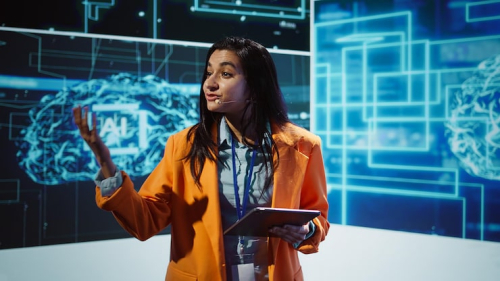
In boardrooms across the United States, forward-thinking leaders are realizing that the most effective artificial intelligence systems do not replace human talent but rather amplify judgment, creativity, and empathy. As organizations integrate AI into daily operations, the true competitive advantage emerges from workforces equipped to collaborate meaningfully with these tools. This intersection of human-centered AI and strategic upskilling is creating more resilient, innovative workplaces where technology enhances rather than diminishes human potential.
The Growing Imperative for Human-Centered AI
Human-centered AI places people at the heart of technology design and implementation. It acknowledges that while algorithms excel at processing data and identifying patterns, humans provide essential context, ethical reasoning, and creative insight. In North America and across Europe, where hybrid and remote work models have become standard, preparing employees to partner effectively with AI has grown critical for sustaining both innovation and strong organizational cultures.
Workforce development, education innovation, and entrepreneurship serve as vital pillars in this evolution. Progressive organizations are shifting away from viewing AI purely as an efficiency tool and instead embracing it as a catalyst for human advancement. This perspective aligns closely with JoAnn Rolle’s approach, which combines real-world expertise with thoughtful, purpose-driven strategies that honor both technological progress and human insight.
Emerging Trends Reshaping Workplaces Across Regions
From healthcare systems in the United States to financial institutions in Canada and manufacturing hubs in Europe, AI is being integrated as a collaborative partner. Clinicians rely on AI to highlight potential insights while exercising their professional intuition. Financial professionals use machine learning to accelerate analysis yet retain final oversight on nuanced regulatory and customer matters. Manufacturers combine robotic accuracy with human problem-solving on production lines.
The focus has clearly moved from worker displacement through automation toward employee augmentation that unlocks greater potential. Companies are embedding AI literacy into regular operations rather than limiting it to experimental projects. This shift underscores a key realization: sustainable AI adoption depends on teams that deeply understand both the strengths and boundaries of these technologies.
Organizations throughout the United States are investing in reskilling efforts that uphold ethical practices and strengthen competitive positioning. Productivity software solutions play a foundational role in supporting this transformation. Industry insights highlight that the United States continues to lead in this space, largely due to the demands of evolving remote and hybrid work environments that require seamless human-AI collaboration.
Real-World Examples of Human-Centered AI Success
In healthcare settings, AI tools now assist with initial image analysis and data triage. Instead of supplanting medical professionals, these systems allow radiologists, nurses, and care teams to devote more energy to patient relationships and complex diagnostic decisions. Targeted upskilling helps staff critically evaluate AI recommendations while preserving the compassionate human element central to quality care.
Financial services organizations deploy AI for advanced fraud detection and compliance monitoring. Through focused training programs, employees learn to merge algorithmic efficiency with contextual understanding of client needs and regulatory requirements. The outcome is not only greater accuracy but also enhanced trust and risk management across operations.
Creative and entrepreneurial environments demonstrate similar patterns. Tech startups and innovation labs blend AI capabilities with human creativity, often incorporating digital art and design thinking. This fusion ensures solutions remain intuitive, emotionally intelligent, and aligned with real human experiences. Such cases illustrate how human-centered design principles make technology feel supportive rather than intrusive.
Adapting Strategies Across Borders
While core principles remain consistent, successful implementations adapt to regional contexts. European organizations emphasize GDPR compliance and ethical AI frameworks. Canadian teams focus on inclusive workforce development that respects diverse cultural perspectives. U.S. companies often prioritize rapid innovation balanced with HIPAA standards in sensitive sectors. This regional awareness strengthens overall effectiveness.
Addressing Key Challenges in AI Implementation
Even with clear benefits, organizations encounter genuine obstacles. Skill gaps in AI literacy can hinder progress, while some leadership teams favor immediate efficiency gains over sustained workforce investment. These dynamics sometimes create resistance and inconsistent results.
Regulatory landscapes add meaningful complexity. Healthcare providers must navigate HIPAA requirements around AI-assisted insights. Broader data protection rules like CCPA in the United States, GDPR across Europe, and equivalent Canadian standards demand careful governance. Organizations need flexible strategies that respect these varied compliance environments.
Fortunately, practical approaches are proving effective. Mentorship initiatives connect technical and domain experts. Microlearning modules fit naturally into busy schedules. Cross-functional training builds collaboration skills. These methods directly respond to common concerns about program value and clarity, demonstrating tangible returns rather than abstract promises.
Practical Upskilling Strategies for Lasting Impact
Successful programs begin with honest capability assessments rather than generic assumptions. Organizations map existing skills against emerging needs and then create learning pathways grounded in adult education best practices. Role-specific training consistently outperforms broad, one-size-fits-all sessions.
- Building a continuous learning culture: Embed short, relevant AI modules directly into daily workflows instead of treating development as isolated events.
- Encouraging mentorship and peer exchange: Foster environments where colleagues can share practical experiences and creative solutions for working alongside AI tools.
- Integrating creative perspectives: Use digital art, design thinking, and innovative exercises to help employees explore AI’s potential while strengthening uniquely human contributions.
- Focusing on meaningful outcomes: Measure success through improved decision quality, higher employee engagement, and tangible innovation rather than simple completion rates.
These approaches embody the distinctive combination of technology, humanity, and artistic insight that defines truly transformative workforce initiatives.
The Compelling Business Case for People-First AI
Organizations that commit thoughtfully to upskilling report stronger results across multiple dimensions. Human-AI collaborative teams often excel in complex problem-solving where purely automated systems fall short. Innovation accelerates when technical power meets creative and strategic thinking. Employee retention and engagement rise when workers feel empowered rather than threatened by technological change.
Long-term organizational resilience develops through adaptable teams ready to evolve with AI advancements. Employees transition from passive observers to active shapers of technology deployment. This people-centered philosophy directly addresses doubts about return on investment and differentiation by offering proven frameworks rooted in practical expertise rather than theoretical concepts.
Actionable Next Steps for Organizational Leaders
Leaders can begin with focused pilots. Select one department or process where AI augmentation could deliver quick, visible value. Implement with emphasis on learning, feedback, and iterative improvement. Actively solicit input from employees at all levels their frontline perspectives frequently reveal the most valuable adjustments.
Partnering with experienced thought leaders who combine academic depth and hands-on workforce development knowledge can accelerate progress. The strongest transformations blend external frameworks with internal realities, resulting in solutions that are both visionary and realistically achievable.
Preparing for the Future of Work
The coming years of work will be shaped less by the volume of AI adoption and more by the care with which organizations prepare their people to thrive alongside intelligent systems. Human-centered AI represents a profound cultural evolution one that places equal importance on wisdom, creativity, and ethical judgment as on computational power.
By adopting upskilling strategies that respect both human potential and technological advancement, organizations in the United States can develop workplaces that are simultaneously more productive, more innovative, and more satisfying. The necessary tools exist today. The decisive factor remains whether leaders will invest sufficiently in the human capabilities required to guide them responsibly.
Those who make this commitment will find that the greatest competitive edge is not the most advanced AI model. It is the skilled, confident people who understand how to direct and elevate it.
Frequently Asked Questions
What is human-centered AI and why is it important for workforce development?
Human-centered AI is an approach that places people at the heart of technology design and implementation, recognizing that humans provide essential context, ethical reasoning, and creative insight that algorithms cannot replicate. Rather than replacing workers, it amplifies human judgment, creativity, and empathy. For workforce development, this means equipping employees with the skills to collaborate meaningfully with AI tools making upskilling a strategic priority for organizations across the U.S., Canada, and Europe.
What are the most effective upskilling strategies for AI implementation in the workplace?
The most effective upskilling strategies start with honest capability assessments and role-specific training rather than one-size-fits-all programs. Organizations should embed short AI literacy modules directly into daily workflows, foster peer mentorship, and use design thinking exercises to strengthen uniquely human contributions. Measuring success through improved decision quality and employee engagement rather than just completion rates ensures training delivers lasting, tangible impact.
How are industries like healthcare and finance successfully adopting human-centered AI?
In healthcare, AI assists with image analysis and data triage, freeing clinicians to focus on patient relationships and complex diagnoses with targeted upskilling helping staff critically evaluate AI recommendations. In financial services, employees are trained to combine AI-driven fraud detection and compliance monitoring with contextual knowledge of client needs and regulatory requirements like HIPAA and GDPR. Both sectors demonstrate that sustainable AI adoption depends on teams who understand both the strengths and boundaries of these technologies.
Disclaimer: The information provided is for general knowledge and educational purposes only and does not constitute professional advice.
You may also be interested in: Silicon Valley’s Permanent Underclass Problem: The Workforce Solution Companies Are Missing
Organizations are being asked to prepare diverse talent for AI, changing work models, and rising skill demands, and technology alone won’t close the gap. Dr. JoAnn Rolle is a Ph.D. economist, former IBM executive, former Dean of the School of Business at Medgar Evers College (CUNY), Past President of the National HBCU Business Deans Roundtable, author of Tech-Enabled Futures. Her Tech-Enabled Futures™ approach treats AI as a teammate that amplifies human judgment instead of replacing it. She helps organizations turn AI disruption into practical, inclusive strategies that build AI readiness, develop talent, and prepare people to thrive in the future of work. Start the conversation today.
Powered by flareAI.co
